North Avenue to the Moon
By Harvey Li, Kaeden Palmer, Miller Troutt, and Eekiel Currie
Georgia Tech · In Space
A Legacy Written
in Orbits
From the lunar surface to the commanding deck of the ISS — Georgia Tech alumni have shaped human spaceflight across six decades. The numbers below only scratch the surface.
Total Days in Space
days combined
Total Spacewalks
EVAs
Space Shuttle Missions
flights
ISS Commands
astronauts commanded ISS
Final Shuttle Mission
Georgia Tech astronauts flew on STS-135
Only Moon Walker
Apollo 16
Most EVAs
9 spacewalks, 59+ hours
Only Female PhD
in Space
Only Biology Major
in Space
The mission continues
Numbers tell a story.
The people make it real.
Section Two · Pioneer
John
Young
Six spaceflights. Four spacecraft classes. One moonwalk. No one has ever done what John Young did — and he started at Georgia Tech.
From Campus to Cockpit
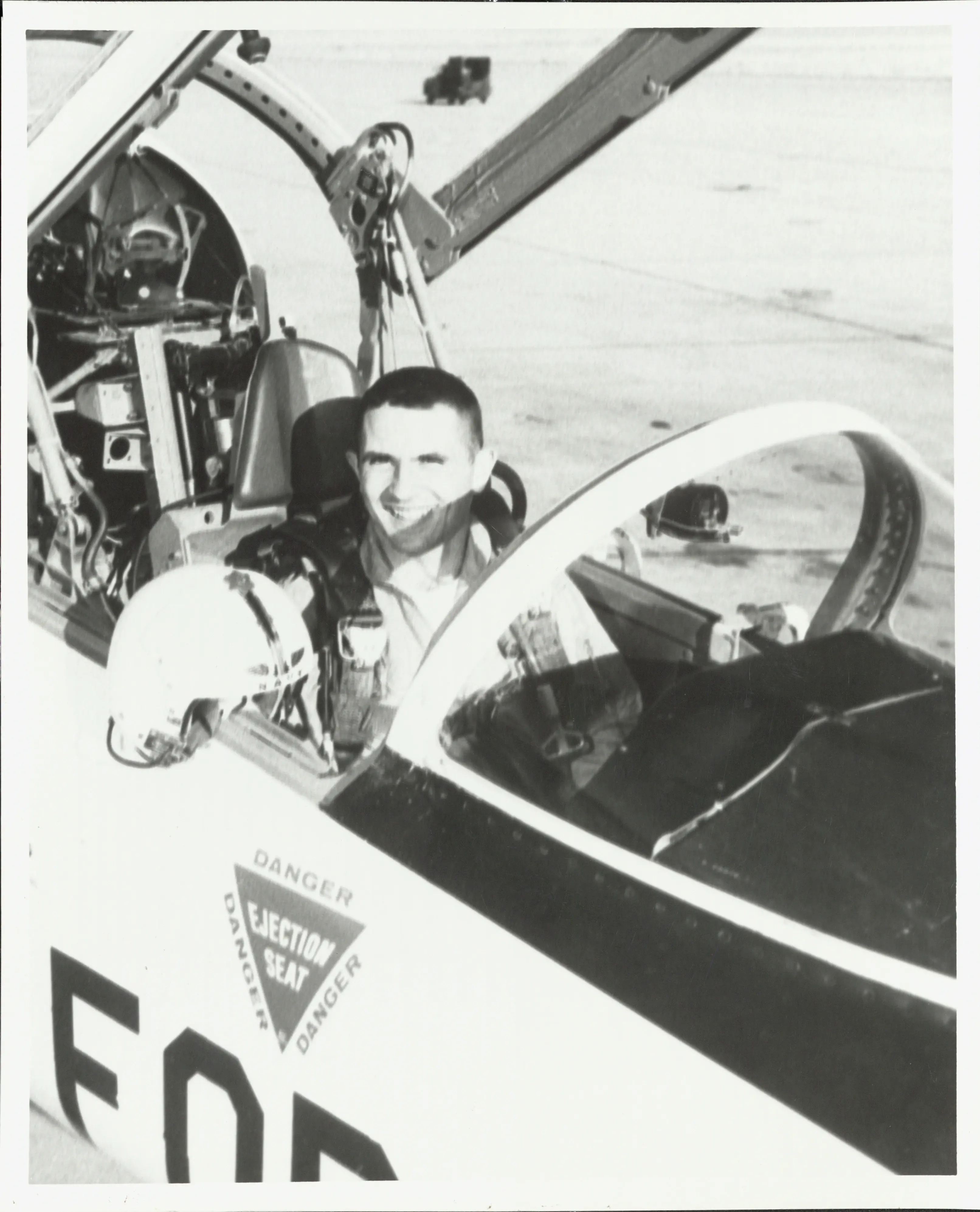
John Watts Young earned his BS in Aeronautical Engineering from Georgia Tech, then entered the Navy: flying fighters across the Mediterranean and setting two world time-to-climb records in the F-4 Phantom.
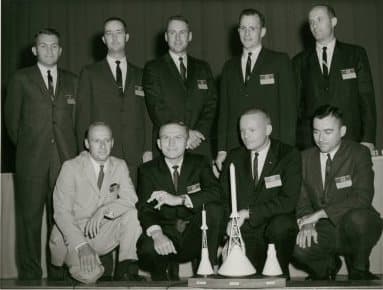
NASA Astronaut Group 2
Chosen alongside Neil Armstrong for the 'New Nine,' NASA's second astronaut class, assembled specifically to reach the Moon. Young was 32 years old.
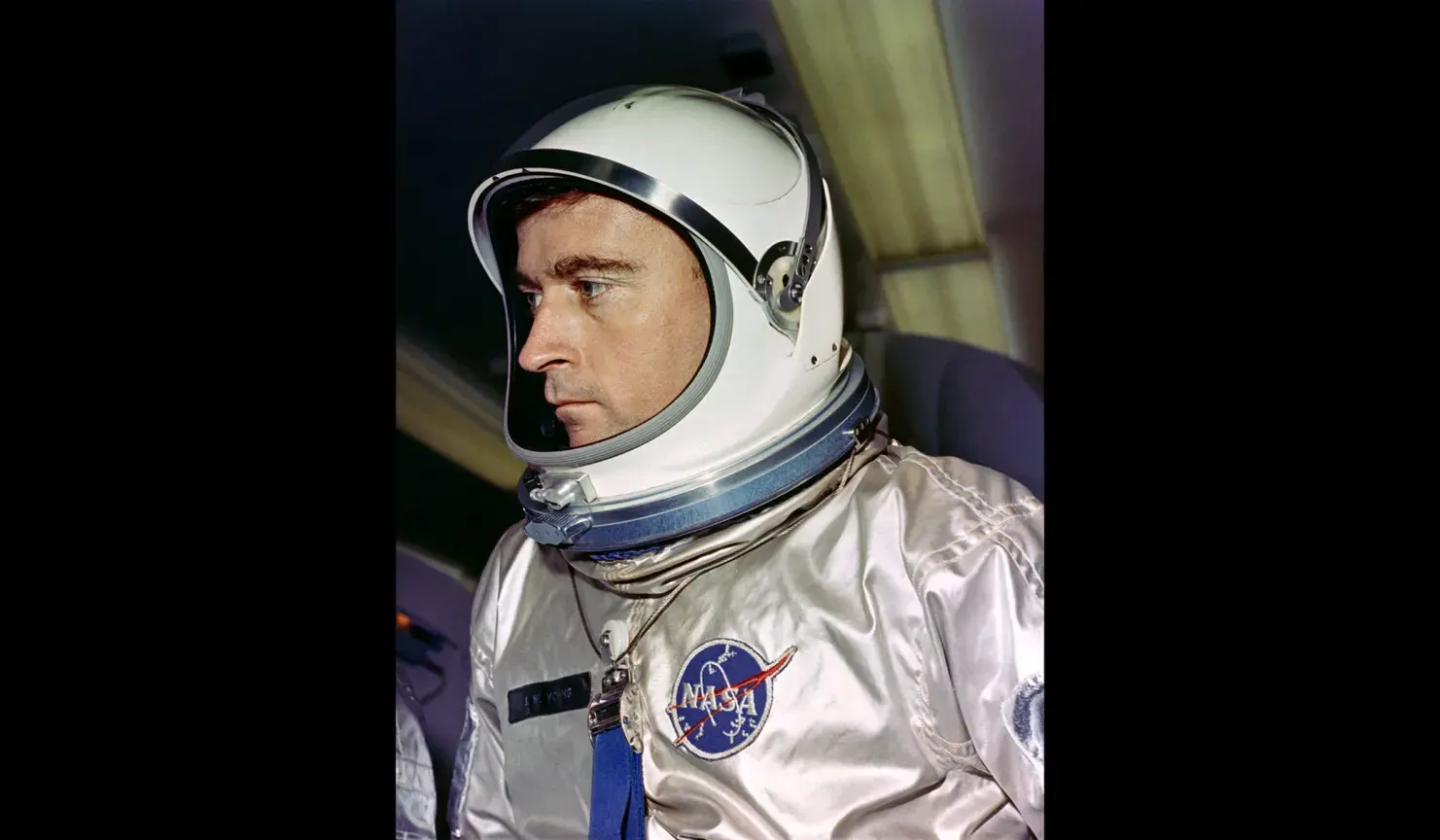
Gemini 3
Young's debut in orbit. He piloted the first crewed Gemini mission and smuggled a famous corned beef sandwich aboard.
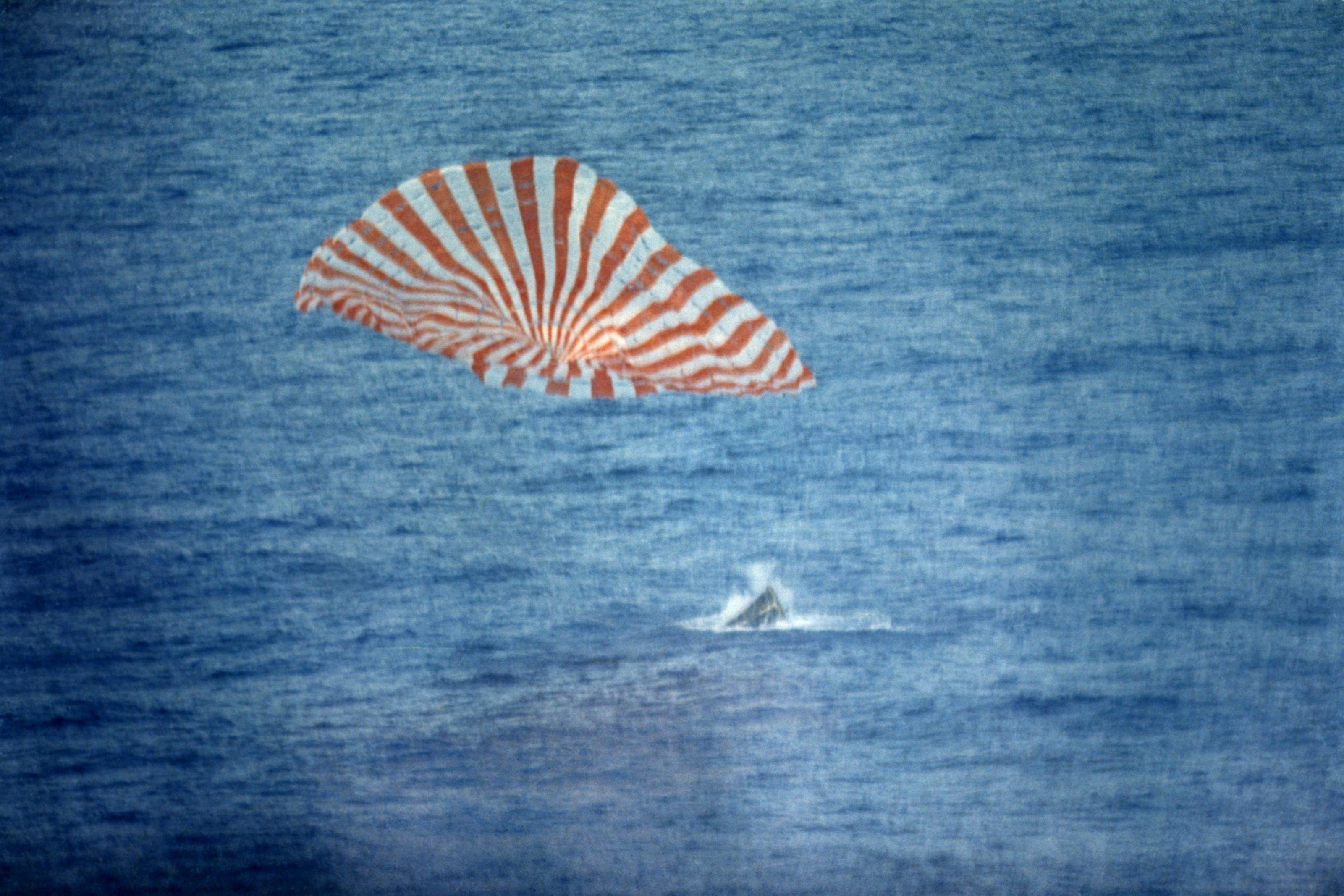
Gemini 10
First dual rendezvous in spaceflight history. Young and Michael Collins docked with two separate spacecraft in a single mission, which had never been done before.
Apollo 10
Orbited the Moon alone while Stafford and Cernan took the lunar module to within 47,400 feet of the surface.
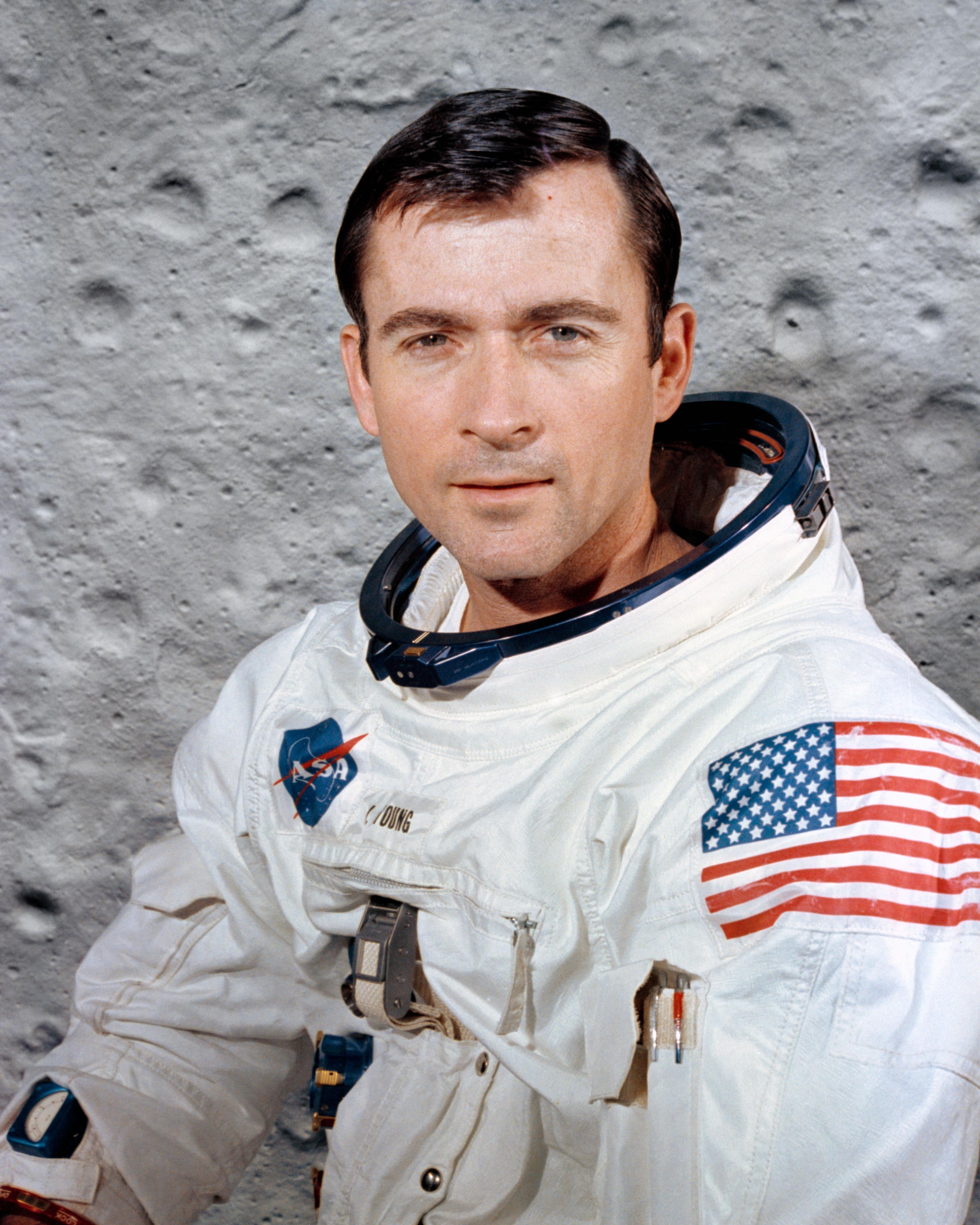
Apollo 16: On the Moon
Young walked on the Moon near the Descartes Highlands for 71 hours. He drove the Lunar Rover across 27 km of lunar terrain and collected 95 kg of samples. Georgia Tech had reached the Moon.
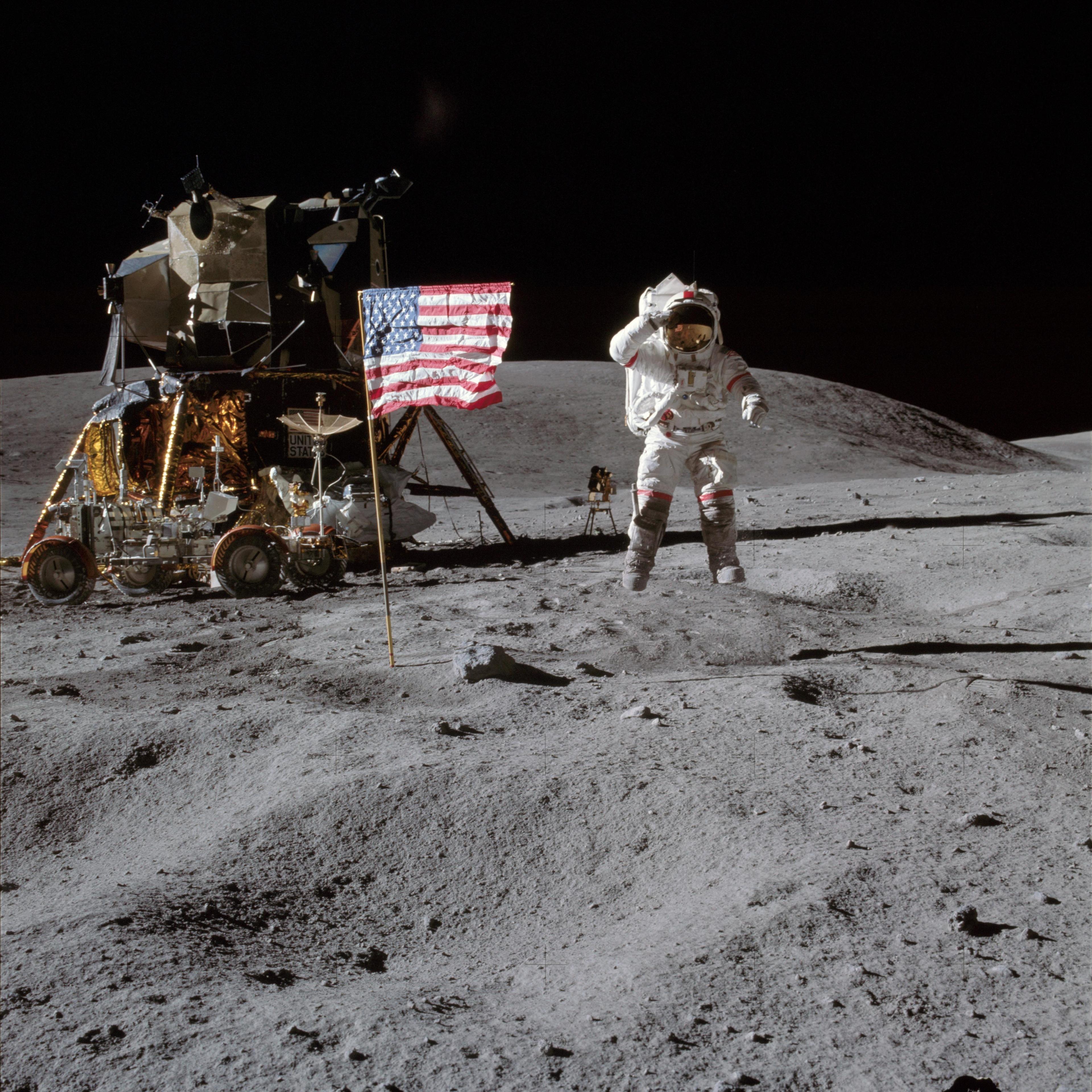
STS-1 Columbia
Commanded the maiden flight of Space Shuttle Columbia, which was the first crewed spacecraft in American history to fly without a prior unmanned test flight.
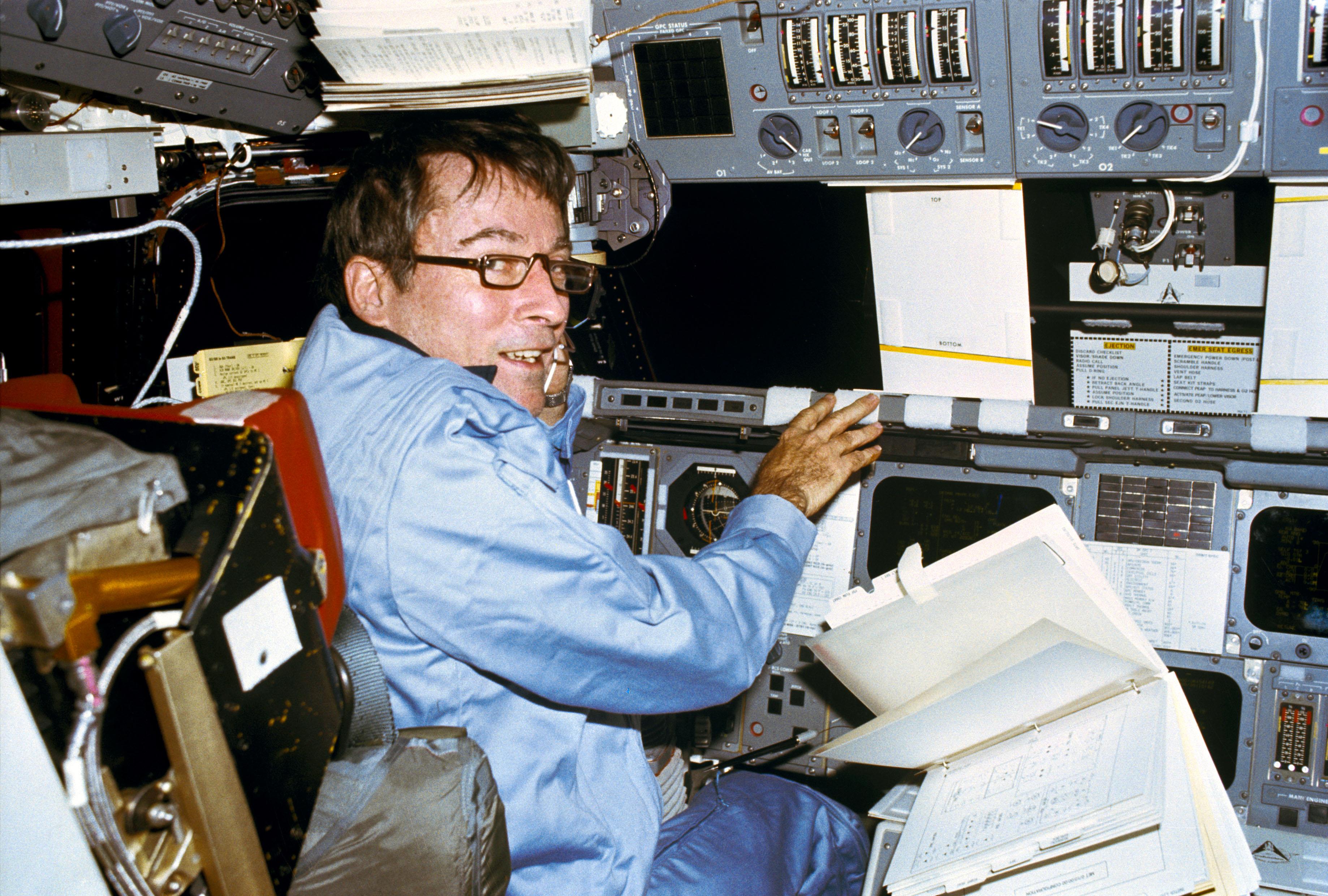
STS-9 Spacelab
Young's sixth and final flight, placing him in a rarefied group of only three humans ever to complete six spaceflights.

A Legacy Written in Stars
John Young passed away on January 5, 2018 as the only person ever to pilot four different classes of spacecraft.
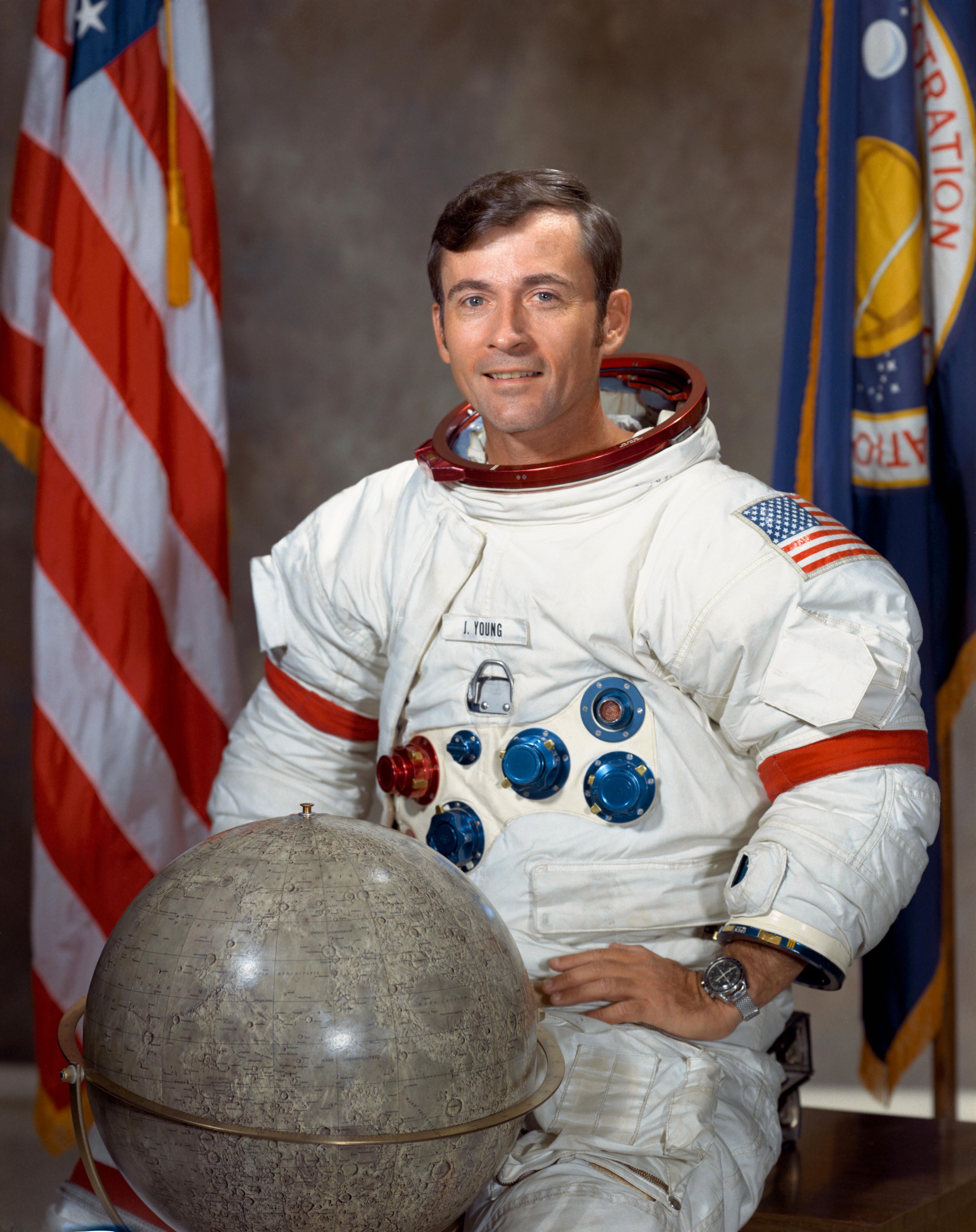
“The most important thing we can do is inspire young minds.”
— John W. Young · Georgia Tech ’52
The Georgia Tech Astronaut Pipeline
Whether through undergraduate programs like John Young's Chi Fraternity secretary position and Circle K Club leadership, or Richard Truly's progression to president of Tau Beta Pi and the American Rocket Society, campus involvement built the foundation for space leadership. The NROTC and Air Force ROTC programs proved particularly crucial, commissioning officers who later commanded space shuttles and the International Space Station.
Graduate students like Scott Horowitz directed ambitious projects like HAWK, while Sandra Magnus pursued cutting-edge ceramic engineering research. Military service academies—West Point and the Air Force Academy—sent their best officers to Georgia Tech for advanced degrees, creating a distinctive pipeline: service academy → military aviation → Georgia Tech MS/PhD → NASA selection.
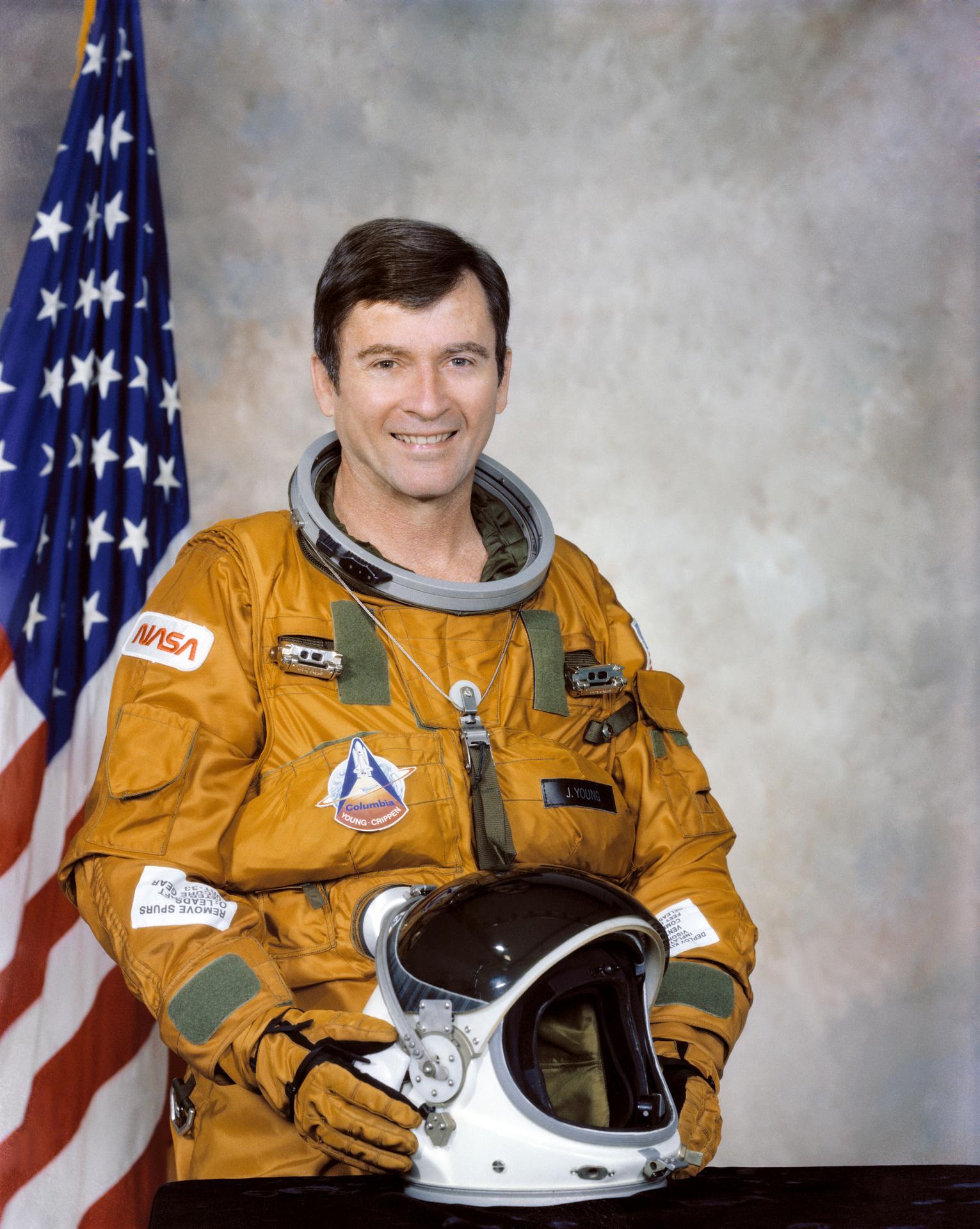
John W. Young
AE '52
Pre-Graduation
Secretary of Chi Fraternity, Treasurer and Vice President of Circle K Club, and apart of Tau Beta Pi honor society.
1952
Graduated with a B.S. in Aeronautical Engineering.
April 1962
Set a world speed climb record in a Navy F-4H-1 fighter jet.
October 1962
Selected for NASA’s second astronaut group.
1965
Flew as a member of the first two-man Gemini mission.
1972
Landed on the moon during the Apollo 16 mission.
Why do so many Georgia Tech alumni become astronauts compared to other universities?
Top Astronaut Producing Institutions
Among public universities, Tech stands unparalleled through a distinctive partnership of academic rigor and strategic pipelines.
Advancing the Frontier
#2
Aerospace Engineering Program in the Nation
(Undergraduate & Graduate)
#1
Aerospace Engineering Program among Public Universities
(Undergraduate & Graduate)
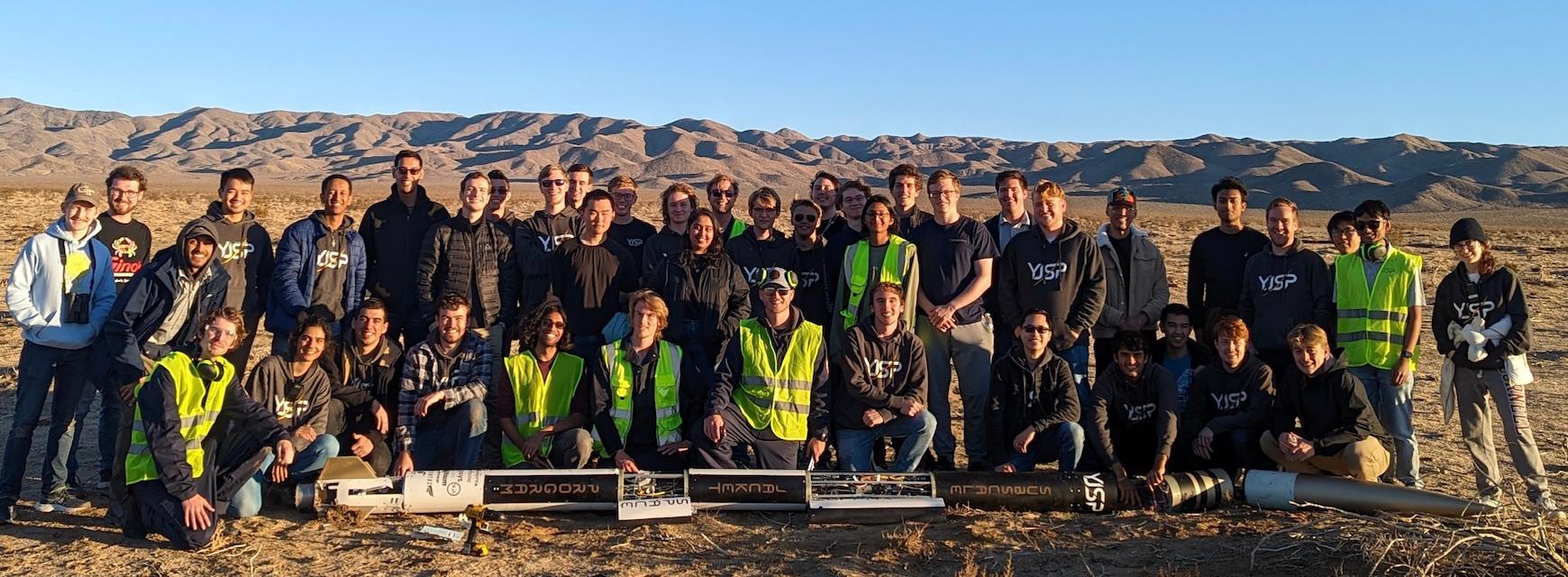
YJSP
YJSP is pioneering collegiate rocketry through the design, build, test, and launch of liquid fueled rockets. On April 11, 2026, YJSP’s Vespula rocket reached a height of 56,590 feet, obtaining the Collegiate Liquid Rocket Altitude Record. They are continuing to pioneer in the collegiate rocket community with their ambitious goal of reaching the Karman line at 3 million feet.
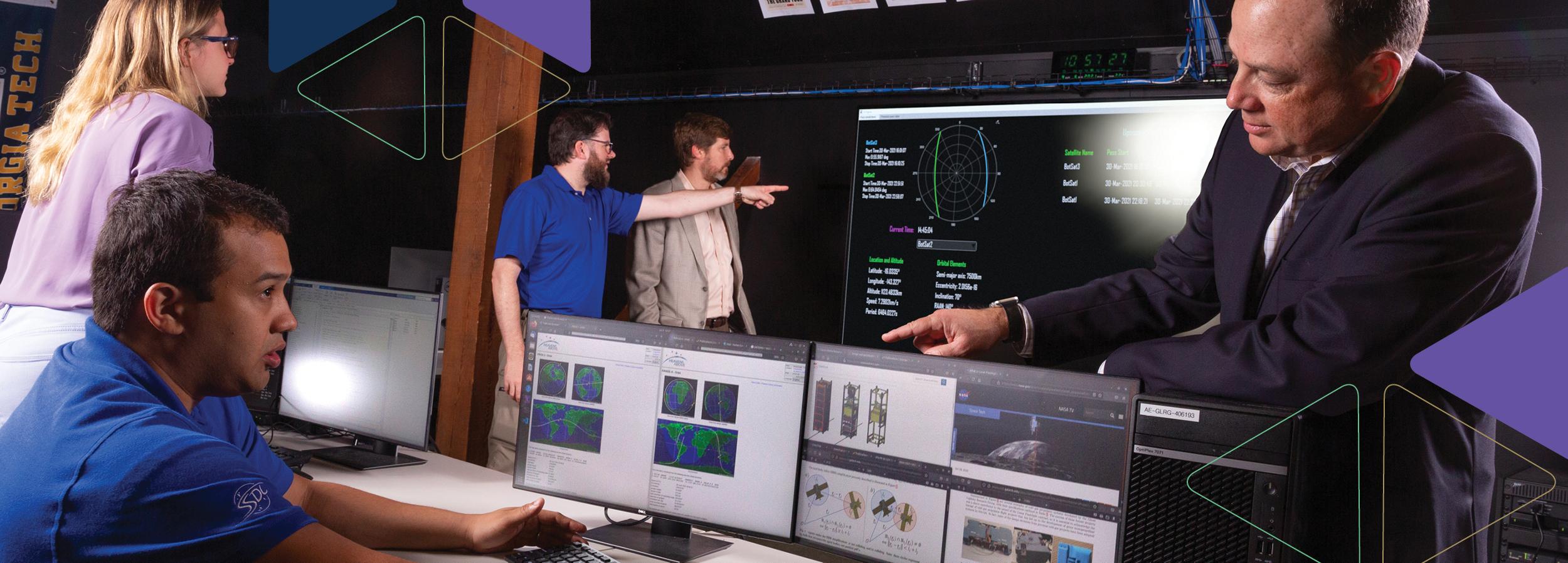
NASA Partnership with Georgia Tech
A historic and ongoing collaboration supplying NASA with critical research, groundbreaking studies, and a direct pipeline of exceptional talent shaping the future of space exploration.
The Next Frontier
From John Young to the next generation of aerospace engineers, the spirit of space exploration is woven into the very fabric of this institute. At Georgia Tech, every student is given the tools, the rigorous environment to accomplish great things.
Whether building rockets in a campus parking lot or commanding a multi-national space station, the trajectory starts here.
Sources & Citations
Georgia Tech Archives & Yearbooks
- Aerospace at Georgia Tech Newsletter. Georgia Tech Archives, 2005–2006, handles 1853/10845, 1853/10846.
- Blue Print 1952. Georgia Institute of Technology, 1952. Georgia Tech Archives, handle 1853/25833.
- Blue Print 1959. Georgia Institute of Technology, 1959. Georgia Tech Archives, handle 1853/30786.
- Blue Print 1962. Georgia Institute of Technology, 1962. Georgia Tech Archives, handle 1853/25833.
- Blue Print 1963. Georgia Institute of Technology, 1963. Georgia Tech Archives, handle 1853/30786.
- Blue Print 1972. Georgia Institute of Technology, 1972.
- Blue Print 1973. Georgia Institute of Technology, 1973.
- Blue Print 1974. Georgia Institute of Technology, 1974. Georgia Tech Archives, handle 1853/38901.
- Blue Print 1975. Georgia Institute of Technology, 1975. Georgia Tech Archives, handle 1853/32510.
- Blue Print 1982. Georgia Institute of Technology, 1982.
- Blue Print 1986. Georgia Institute of Technology, 1986.
- Blue Print 1992. Georgia Institute of Technology, 1992.
- Georgia Tech Materials Science Archives. Georgia Tech Ceramic Engineering Department.